Something has changed.
You just don't know why.
Maybe it's...
Your sleep has changed.
Your joints ache.
You've gained weight around your middle.
Your skin is different.
You don't recover from workouts like you used to.
Or maybe it's several things at once.
But you don't know what's driving the change, or what actually needs to be addressed.
I don't look at each symptom separately.
I look at your symptoms, history, lifestyle and laboratory data together to understand what may be driving the bigger picture.

You're doing many of the things you've always done, but your body isn't responding the same way.
Your body composition has changed.
Despite your efforts, losing weight feels harder.
Your sleep has changed.
You're waking during the night or not feeling restored.
Your energy has changed.
You don't have the same capacity you once did.
Your periods have changed.
You're not sure what to expect from one cycle to the next.
Your digestion has changed.
You're no longer tolerating foods you once enjoyed.
Your stress feels harder to manage.
You're wondering why small tasks suddenly feel overwhelming.
A general sense that you don't feel like yourself anymore.
You've been told it's:
stress.
aging.
hormones.
Or that it's simply something you'll have to live with.
But you're not satisfied with that answer.
What is actually going on? This is where I can help.

How I Help.
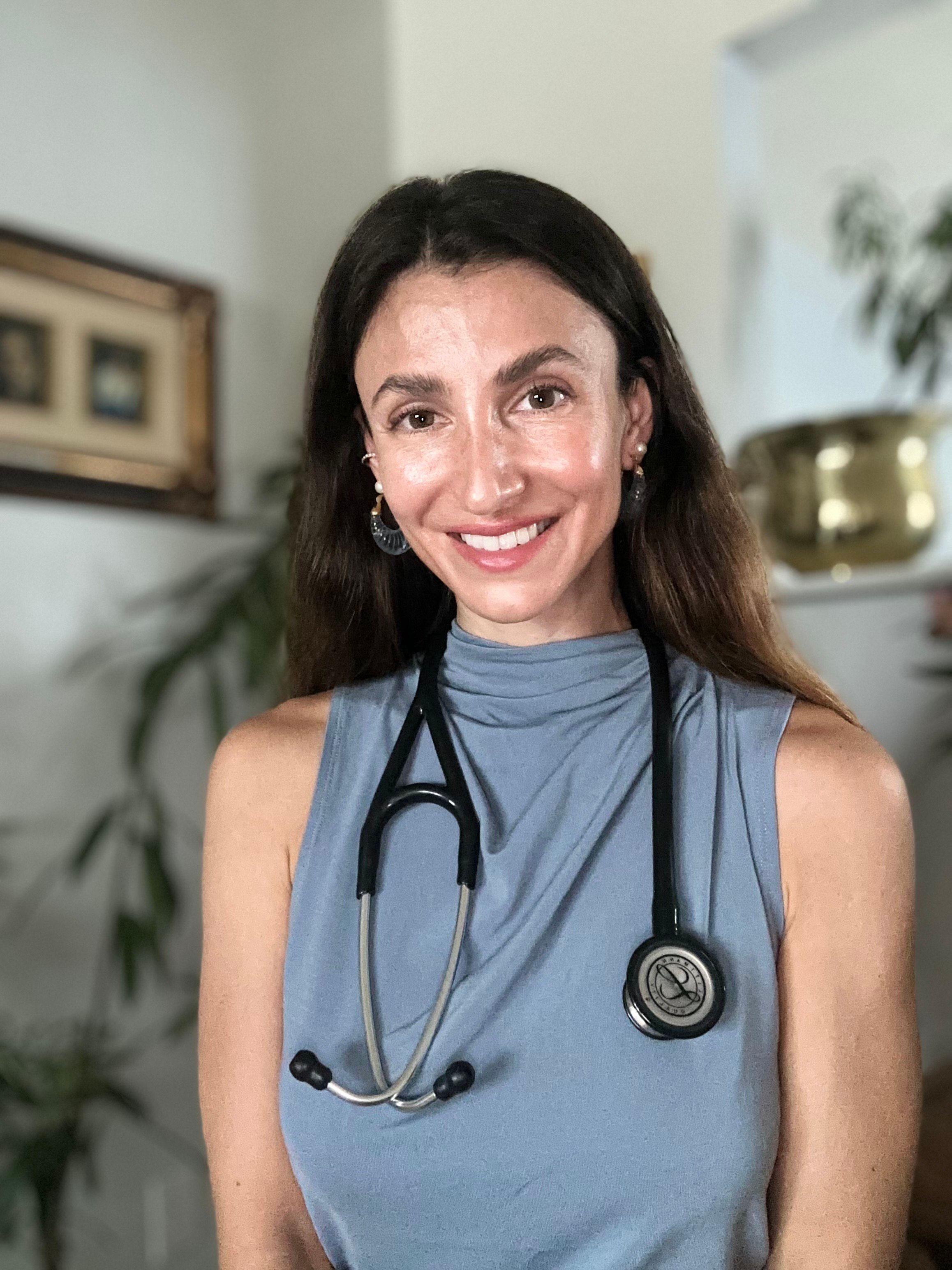
As a naturopathic doctor, I help people—particularly through midlife and other periods of significant hormonal change—make sense of symptoms that don't always have a simple explanation.
Rather than treating symptoms or lab results in isolation, I step back and look at the bigger picture.
I bring together your symptoms, health history, lifestyle, medications and supplements, physical health, and laboratory results to understand what may be contributing to the way you're feeling.
That might mean looking more closely at your metabolic, hormonal, thyroid, sleep, digestive and cardiovascular health, as well as nutrition, physical activity and stress—and how these areas may be influencing one another.
The goal isn't to find one explanation for everything. It's to understand which factors are most relevant in your particular situation and what is worth doing about them.

METABOLIC · HORMONAL · THYROID · SLEEP · DIGESTIVE · CARDIOVASCULAR
The goal isn't to find one explanation for everything.
Connecting the dots.
Your symptoms don't exist in isolation.
Weight change, fatigue, poor sleep, digestive symptoms, hormonal changes, and changes in how you feel day-to-day can overlap in ways that aren't obvious when each issue is considered separately.
Your weight change
may not be just about calories.
Your fatigue
may not be just about getting older.
Your sleep
may not be just a sleep problem.
Your hormonal changes may be important—but they may not explain everything.
And a “normal” lab result doesn't necessarily mean there's nothing useful left to investigate. I look at the information together, consider the possibilities, and determine where to focus.
“Normal” doesn't always mean “nothing to investigate.”
Then we make a plan.
You don't need another overwhelming list of things to change.
You need to know:
01 — What is happening?
02 — What might be driving it?
03 — What matters most?
04 — What should we do first?
05 — How will we know if it's working?
Together, we build a plan that is targeted, clear, and measurable, based on your individual biology, goals, the available evidence, and what is realistic for your life.
Targeted.
Clear.
Measurable.
If something is working, we build on it. If it isn't, we ask why and reconsider the approach.
Understand
What's happening? Learn why your body changed and which drivers actually matter.
Prioritize
What matters most? Focus on 1–2 high-leverage steps instead of overwhelming, expensive protocols.
Measure
Is what we're doing actually working? Know how we'll track progress and when we'll evaluate whether the approach is working.
Good care isn't about following a protocol perfectly.
It's about understanding your body, making informed decisions, and adjusting as we learn more.
You don't need to figure it all out yourself.
You need someone who can step back, look at the whole picture, and help you understand what matters.
Book a Discovery Call.
Let's connect the dots.